
Starting with recurrent glioblastoma
Programmable
durabilityfor solid-tumor cell therapy.
We engineer healthy-donor CAR-T cells to resist the signals tumors use to shut them down.
KGEN-001 · Preclinical development
Explore Our Science
Lead program · Preclinical development
KGEN-001
Recurrent glioblastoma
A healthy-donor CAR-T with dual targeting and six coordinated base edits.
Explore KGEN-001Backed by investors. Supported by disease foundations.
Investor backing







Disease foundation support



CAR-T therapies use engineered immune cells to recognize and attack cancer.
The durability gap
In recurrent glioblastoma, CAR-T can shrink tumors. Control often does not last.
Published GBM CAR-T example Not KGEN-001
Patient 26 · Disease progressed by month 1
KiraGen’s approach
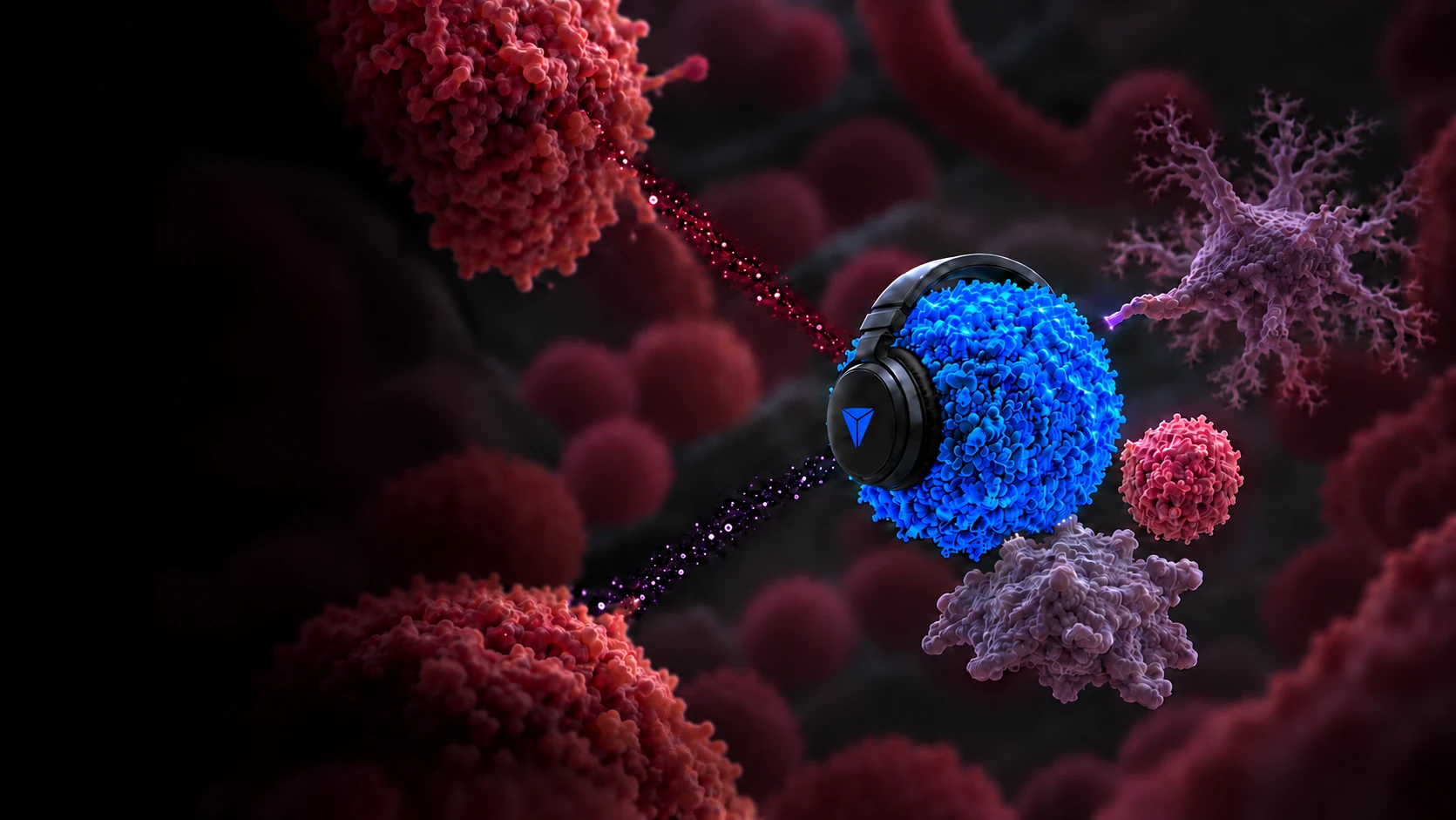
Noise cancellation for cell therapy.
We build CAR-T cells to ignore multiple signals, not overpower them.
Combinations of coordinated gene edits. Designed to resist multiple tumor shutdown signals.Patient evidence guides what we protect against. Multiplex editing lets us test those protections together.
Explore the scienceKiraLOGIC · Design + learn
How we choose
what to build next.
KiraLOGIC connects machine-learning predictions with experiments to prioritize combinations of protective gene edits.
Explore the design loopWhy this team
From multiplex design to patient dosing,
we have done it before.
Members of our team have helped advance multiplex base-edited CAR-T cells from research into clinical development.




The vision
Programmable
durability.
Starting with glioblastoma.
Testing which protections carry into other solid tumors.
Ready when patients need them.
Built to endure when tumors fight back.